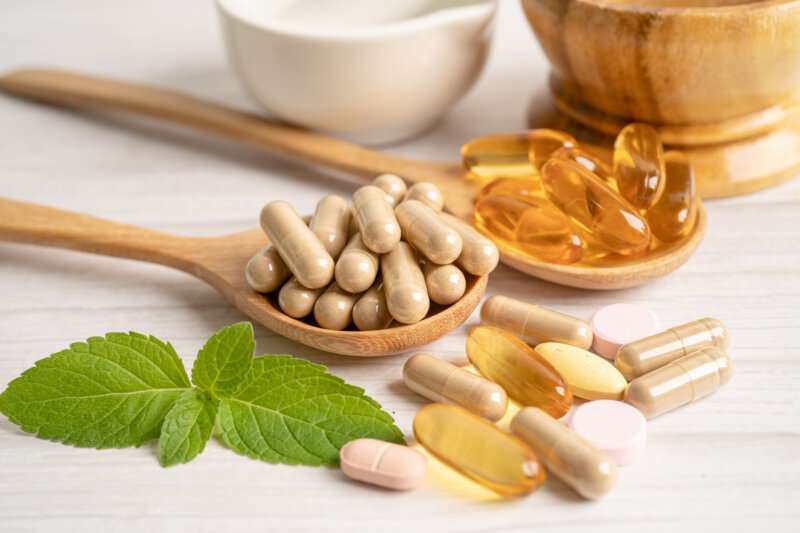
Starchy foods low in dietary fibre, such as white bread, pasta, white rice or breakfast cereals. The starch they contain is rapidly broken down into glucose and enters the bloodstream quickly.
Why are blood sugar spikes problematic – and how can they be avoided?
06. July 2026
from Jutta Hannemann

Do you constantly feel tired after eating, or find yourself hungry again sooner than expected? Blood sugar levels are often to blame. We explain how blood sugar spikes occur, how they can be avoided, and how stable blood sugar levels support energy, satiety and metabolism.
What does the term ‘blood sugar’ actually mean?
Blood sugar levels refer to the concentration of glucose in the blood. Glucose is the body’s most important source of energy; the brain and certain cells in particular rely on a continuous supply. Glucose is transported via the bloodstream to the organs and cells, where it is used to produce energy. (1).
What happens to blood sugar after a meal?
After a meal, blood sugar rises because carbohydrates are broken down into simple sugars in the digestive tract and absorbed into the blood as glucose (2). In response, the body releases insulin, a hormone that ensures glucose is transported from the blood into the cells, where it is either used for energy or stored for later (3).
What are blood sugar spikes and why are they problematic?
It is normal for blood sugar levels to rise after a meal. However, sharp rises – known as blood sugar spikes – are problematic. The body reacts to these by releasing large amounts of insulin, causing blood sugar levels to drop rapidly – often even below the initial level (4). In the short term, this can lead to energy slumps, tiredness and difficulty concentrating. Cravings are also a common consequence, often occurring shortly after the last meal: the falling blood sugar level signals to the brain that the body needs more fuel (4, 5, 6).
In the long term, frequent blood sugar spikes can damage the metabolism: they can increase the risk of chronic diseases, slow down fat burning and thus promote weight gain, as persistently elevated insulin levels inhibit the release of fat from the cells (7, 8, 9). In short: the more frequent and pronounced the spikes, the greater the strain on the metabolism. Conversely, stable blood sugar levels can help reduce cravings, maintain a more consistent energy level and relieve the strain on the metabolism in the long term (6, 10).
What affects blood sugar levels?
The extent to which blood sugar levels rise after a meal depends primarily on the composition of the meal. Foods rich in carbohydrates and sugar cause blood sugar to rise quickly and significantly, whilst dietary fibre, protein and fat can slow down and delay this rise (11). This is because dietary fibre slows down digestion and the absorption of glucose in the gut – meaning that glucose enters the bloodstream more gradually (12). Proteins and fats also slow down gastric emptying, thereby moderating the rise in blood sugar after a meal (13, 14).
Which foods cause blood sugar levels to rise particularly sharply?
Sugary foods and drinks, including sweets, cakes, sweetened dairy products, sugary drinks and fruit juices. They provide readily available sugar without any dietary fibre to slow it down.
What practical tips can help slow down the rise in blood sugar?
Blood sugar levels can be stabilised by carefully planning the composition and order of meals, as well as by exercising after eating. It’s not about deprivation, but about making smart choices in everyday life.
- The order makes all the difference: if you eat fibre-rich foods first during a meal, followed by sources of protein and fat, and save the carbohydrates for last, you can significantly flatten the rise in blood sugar after eating (15, 16). In practical terms, this means: vegetables or salad first, followed by, for example, meat, fish, tofu or pulses, and then rice, potatoes or pasta. With mixed dishes, where it is difficult to follow this order, it helps to eat a portion of vegetables or salad before the main meal.
- Combining carbohydrates: Carbohydrate-rich foods have a less pronounced effect on blood sugar levels when eaten alongside protein, fat or dietary fibre (17). In practice, this means combining bread with eggs, cottage cheese or nut butter, or eating fruit with nuts or natural yoghurt.
- Selected plant compounds and micronutrients: Certain plant compounds and micronutrients can further help regulate blood sugar levels after high-carbohydrate meals. These include extracts from white mulberry, green tea, chromium and inositol – which are discussed in more detail below.
- Exercise after eating: Even a short walk of around 10 minutes after a meal can help to slow the rise in blood sugar. The muscles, when active, absorb more glucose directly from the blood (18, 19, 20, 21).
Which plant compounds and nutrients can help keep blood sugar levels in balance?
Certain plant compounds and micronutrients, such as white mulberry, chromium, green tea and inositol, can help regulate blood sugar levels after carbohydrate-rich meals.
- White mulberry: The plant compound DNJ-1 (1-deoxynojirimycin), which occurs naturally in the leaves of the white mulberry tree, inhibits a specific enzyme that breaks down carbohydrates into glucose (22). This delays carbohydrate digestion, meaning glucose enters the bloodstream more slowly (23). In a double-blind study, white mulberry leaf extract was even found to reduce the post-meal rise in blood sugar by up to 40% (24).
- Chromium: Chromium is a trace element that enhances the action of insulin and helps maintain normal blood sugar levels (25).
- Green tea: Green tea contains catechins, which can support insulin action and fat metabolism (26, 27). They can also help to reduce oxidative stress and thus ease the burden on the metabolism (26).
- Inositol: Inositol is a vitamin-like substance that can support insulin action and thus help stabilise blood sugar levels (28, 29).
Conclusion
Stable blood sugar levels are not a matter of deprivation, but of adopting smart everyday habits. By planning meals carefully, combining carbohydrates sensibly and getting some exercise after eating, you can noticeably reduce energy slumps, cravings and long-term strain on your metabolism. In addition, selected nutrients such as mulberry extract, chromium or inositol can further support blood sugar control.
Sources
(1) Gehring WG. Glucose: Funktionen, Stoffwechsel und Bedeutung für die Gesundheit. DocMedicus. https://www.gesundheits-lexikon.com/Ernaehrung-Diaeten/Monosaccharide-Einfachzucker/Glucose-Funktionen-Stoffwechsel-und-Bedeutung-fuer-die-Gesundheit. Letzte Aktualisierung 5.12.2025. Zugriff am 20.05.2026.
(2) Zielinski J. Ernährung für einen gesunden Blutzuckerspiegel. Thieme Natürlich Medizin. https://natuerlich.thieme.de/blog/detail/ernaehrung-fuer-einen-gesunden-blutzuckerspiegel-4319. Publiziert am 11.06.2025. Zugriff am 03.05.2026.
(3) Bundesamt für Gesundheit BAG. Diabetes. https://www.bag.admin.ch/de/diabetes. Zugriff am 19.05.2026.
(4) Becker N. Glykämischer Index: So wirken Lebensmittel auf den Blutzucker. ARD Gesund. https://www.ndr.de/ratgeber/gesundheit/Glykaemischer-Index-so-wirken-Lebensmittel-auf-den-Blutzucker,gi100.html#:~:text=Nahrungsmittel%20mit%20einem%20hohen%20Glyk%C3%A4mischen%20Index%20f%C3%BChren,und%20darauf%20reagiert%20der%20K%C3%B6rper%20mit%20Hei%C3%9Fhunger. Publiziert am 27.08.2025. Zugriff am 19.05.2026.
(5) Inchauspé J. Der Glukose-Trick. München: Heyne; 2022: S.95-96.
(6) Wyatt P, Berry SE, Finlayson G, et al. Postprandial glycaemic dips predict appetite and energy intake in healthy individuals. Nat Metab. 2021;3(4):523-529. doi:10.1038/s42255-021-00383-x.
(7) Inchauspé J. Der Glukose-Trick. München: Heyne; 2022: S.112.
(8) Kolb H, Stumvoll M, Kramer W, Kempf K, Martin S. Insulin translates unfavourable lifestyle into obesity. BMC Med. 2018;16(1):232. Published 2018 Dec 13. doi:10.1186/s12916-018-1225-1.
(9) Ceriello A, Esposito K, Piconi L, et al. Oscillating glucose is more deleterious to endothelial function and oxidative stress than mean glucose in normal and type 2 diabetic patients. Diabetes. 2008;57(5):1349-1354. doi:10.2337/db08-0063.
(10) GlucoseGoddess. Science Episode. Why you should improve your glucose levels (even if you don't have diabetes). https://www.glucosegoddess.com/en-ch/pages/science-episode-why-glucose-matters. Zugriff am 19.05.2026.
(11) Diabetesschweiz. Diabetes und Ernährung. https://www.diabetesschweiz.ch/ueber-diabetes/leben-mit-diabetes/diabetes-und-ernaehrung. Zugriff am 20.05.2026.
(12) Perry JR, Ying W. A review of physiological effects of soluble and insoluble dietary fibers. Journal of Nutrition and Food Sciences 2016;6:2.
(13) Gentilcore D, Chaikomin R, Jones KL, et al. Effects of fat on gastric emptying of and the glycemic, insulin, and incretin responses to a carbohydrate meal in type 2 diabetes. J Clin Endocrinol Metab. 2006;91(6):2062-2067. doi:10.1210/jc.2005-2644
(14) Ma J, Stevens JE, Cukier K, Maddox AF, Wishart JM, Jones KL, Clifton PM, Horowitz M, Rayner CK. Effects of a protein preload on gastric emptying, glycemia, and gut hormones after a carbohydrate meal in diet-controlled type 2 diabetes. Diabetes Care. 2009 Sep;32(9):1600-2. doi: 10.2337/dc09-0723. Epub 2009 Jun 18. PMID: 19542012; PMCID: PMC2732158.
(15) Nishino K, Sakurai M, Takeshita Y, Takamura T. Consuming Carbohydrates after Meat or Vegetables Lowers Postprandial Excursions of Glucose and Insulin in Nondiabetic Subjects. J Nutr Sci Vitaminol (Tokyo). 2018;64(5):316-320. doi:10.3177/jnsv.64.316
(16) Shukla AP, Dickison M, Coughlin N, Karan A, Mauer E, Truong W, Casper A, Emiliano AB, Kumar RB, Saunders KH, Igel LI, Aronne LJ. The impact of food order on postprandial glycaemic excursions in prediabetes. Diabetes Obes Metab. 2019 Feb;21(2):377-381. doi: 10.1111/dom.13503. Epub 2018 Sep 10. PMID: 30101510; PMCID: PMC7398578
(17) Lilly LN, Heiss CJ, Maragoudakis SF, Braden KL, Smith SE. The Effect of Added Peanut Butter on the Glycemic Response to a High-Glycemic Index Meal: A Pilot Study. J Am Coll Nutr. 2019;38(4):351-357. doi:10.1080/07315724.2018.1519404.
(18) Engeroff T, Groneberg DA, Wilke J. After Dinner Rest a While, After Supper Walk a Mile? A Systematic Review with Meta-analysis on the Acute Postprandial Glycemic Response to Exercise Before and After Meal Ingestion in Healthy Subjects and Patients with Impaired Glucose Tolerance. Sports Med. 2023;53(4):849-869. doi:10.1007/s40279-022-01808-7
(19) Frampton J, Cobbold B, Nozdrin M, et al. The Effect of a Single Bout of Continuous Aerobic Exercise on Glucose, Insulin and Glucagon Concentrations Compared to Resting Conditions in Healthy Adults: A Systematic Review, Meta-Analysis and Meta-Regression. Sports Med. 2021 Sep;51(9):1949-1966. doi: 10.1007/s40279-021-01473-2. Epub 2021 Apr 27. PMID: 33905087; PMCID: PMC8363558.
(20) Messina G, Palmieri F, Monda V, Messina A. Exercise causes muscle GLUT4 translocation in an insulin-independent manner. Biology and Medicine 2015;7. doi:10.4172/0974-8369.1000S3007.
(21) Deutsches Diabetes-Zentrum DDZ. Neuer Wirkmechanismus für die Verbesserung der Insulinwirkung nach Sport entdeckt. https://ddz.de/neuer-wirkmechanismus-fuer-die-verbesserung-der-insulinwirkung-nach-sport-entdeckt/. Publiziert am 29.9.2021. Zugriff am 19.05.2026.
(22) Thondre PS, Butler I, Tammam J, Achebe I, Young E, Lane M, Gallagher A. Understanding the Impact of Different Doses of Reducose® Mulberry Leaf Extract on Blood Glucose and Insulin Responses after Eating a Complex Meal: Results from a Double-Blind, Randomised, Crossover Trial. Nutrients. 2024 May 29;16(11):1670. doi: 10.3390/nu16111670. PMID: 38892603; PMCID: PMC11174565.
(23) Cho IH, Cheng RR, Jung CW, et al. Effects of 1-Deoxynojirimycin on glycemic control: A systematic review and meta-analysis. NFS Journal 2025;38:100210.
(24) Thondre PS, Lightowler H, Ahlstrom L, Gallagher A. Mulberry leaf extract improves glycaemic response and insulaemic response to sucrose in healthy subjects: results of a randomized, double blind, placebo-controlled study. Nutr Metab (Lond). 2021;18(1):41. Published 2021 Apr 15. doi:10.1186/s12986-021-00571-2.
(25) EFSA Panel on Dietetic Products, Nutrition and Allergies (NDA); Scientific Opinion on the substantiation of health claims related to chromium and contribution to normal macronutrient metabolism (ID 260, 401, 4665, 4666, 4667), maintenance of normal blood glucose concentrations (ID 262, 4667), contribution to the maintenance or achievement of a normal body weight (ID 339, 4665, 4666), and reduction of tiredness and fatigue (ID 261) pursuant to Article 13(1) of Regulation (EC) No 1924/2006. EFSA Journal 2010;8(10):1732. [23 pp.]. doi:10.2903/j.efsa.2010.1732.
(26) Asbaghi O, Rezaei Kelishadi M, Larky DA, et al. The effects of green tea extract supplementation on body composition, obesity-related hormones and oxidative stress markers: a grade-assessed systematic review and dose-response meta-analysis of randomised controlled trials. Br J Nutr. 2024;131(7):1125-1157. doi:10.1017/S000711452300260X.
(27) Esmaeelpanah E, Razavi BM, Hosseinzadeh H. Green tea and metabolic syndrome: A 10-year research update review. Iran J Basic Med Sci. 2021 Sep;24(9):1159-1172. doi: 10.22038/IJBMS.2021.52980.11943. PMID: 35083002; PMCID: PMC8751745.
(28) Miñambres I, Cuixart G, Gonçalves A, Corcoy R. Effects of inositol on glucose homeostasis: Systematic review and meta-analysis of randomized controlled trials. Clin Nutr. 2019;38(3):1146-1152. doi:10.1016/j.clnu.2018.06.957
(29) DiNicolantonio JJ, H O'Keefe J. Myo-inositol for insulin resistance, metabolic syndrome, polycystic ovary syndrome and gestational diabetes. Open Heart. 2022 Mar;9(1):e001989. doi: 10.1136/openhrt-2022-001989.